Africa News · Freedom of Expression Violation
DR Congo Security Forces Accused of Excessive Force During Kinshasa Protest
Human Rights Watch has accused security forces in the Democratic Republic of Congo of using excessive force against protesters opposing proposed constitutional changes that could extend President Félix Tshisekedi’s time in office. The June 12 demonstratio
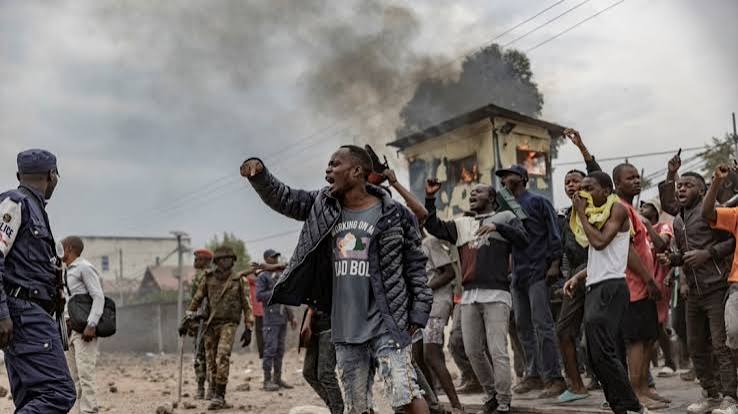
Security forces in the Democratic Republic of Congo used excessive and unnecessary force against demonstrators protesting proposed constitutional changes in Kinshasa on June 12, 2026, Human Rights Watch has said.
The protesters were opposing a proposed law that critics believe could allow President Félix Tshisekedi to remain in power beyond his current constitutional term.
According to Human Rights Watch, police officers used tear gas and batons to stop members of the Article 64 Coalition, known as C64, from reaching the Palace of the People, which houses the country’s parliament.
The rights organisation also accused security personnel of failing to protect protesters from attacks allegedly carried out by members of the Force of Progress, a group associated with the ruling Union for Democracy and Social Progress, or UDPS.
Human Rights Watch deputy Africa director Ashwanee Budoo-Scholtz said the security forces used unnecessary force against citizens attempting to exercise their right to oppose constitutional changes.
She said the authorities not only failed to protect the demonstrators but also contributed to the violence and left protesters exposed to attacks by individuals linked to the ruling party.
Between June 12 and June 22, Human Rights Watch interviewed 38 people about the incident. Those interviewed included 15 C64 members who were injured during the protest and seven members of the Force of Progress.
Authorities Reject Sit-In Venue
On June 11, the governor of Kinshasa rejected C64’s request to organise a sit-in outside the Palace of the People. Authorities proposed an alternative location, but coalition members refused the offer.
The Congolese Constitution protects the right to peaceful assembly. However, the country’s law on public demonstrations allows authorities to prevent or disperse gatherings considered a threat to public order or national security.
Witnesses said violence began at approximately 10 a.m. on June 12, when members of the Force of Progress allegedly attacked offices belonging to several opposition parties affiliated with C64.
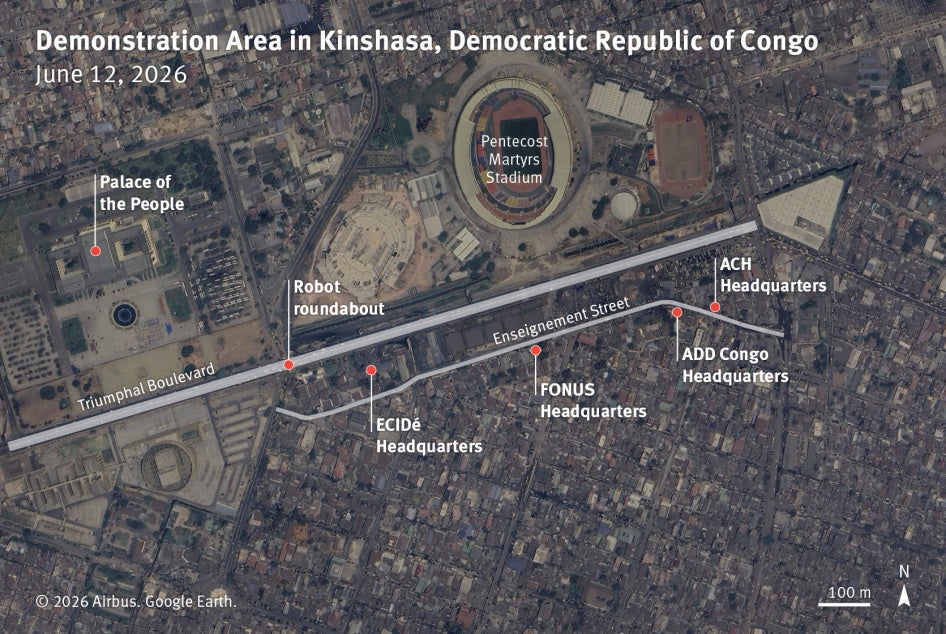
Human Rights Watch said it verified and geolocated videos showing members of the Action for Democracy and Development in Congo defending their headquarters from attackers.
Other images reportedly showed broken glass, scattered debris and an injured woman inside the offices of the Alliance for Change. Damage was also documented at the headquarters of the Innovative Forces for Unity and Solidarity.
Ruling Party Supporters Allegedly Mobilised
Seven members of the Force of Progress told Human Rights Watch that ruling party officials had instructed them to mobilise supporters and prevent the planned sit-in from taking place.
One member claimed that the final mobilisation meeting was held on June 10 in Limete, Kinshasa. During the meeting, two party officials allegedly instructed participants to target opposition leaders and their political organisations.
Another member said participants were promised money for disrupting the demonstration. Some young people reportedly joined the group because of the possibility of receiving informal employment opportunities or financial support.
The UDPS has denied organising or supporting the violence.
Protesters Blocked Near Parliament
At around midday, C64 members gathered at the headquarters of the opposition party Engagement for Citizenship and Development, known as ECiDé, on Triomphal Boulevard.
They later began marching toward the parliament building.
Protesters said police established three barricades near the Robot roundabout in front of the Palace of the People.
When the marchers approached the second barricade, officers allegedly fired tear gas and threw tear-gas canisters toward the crowd.
Members of a special security task force were also reportedly present. The unit allegedly included personnel from the Congolese army, the Republican Guard and national intelligence services.
Protesters maintained that the march remained peaceful until they reached the police barriers. Some said they raised their hands to demonstrate that they were not carrying weapons or seeking confrontation.
One protester said a tear-gas canister struck his leg, causing him to fall and suffer heavy bleeding from his foot.
Stones and Bottles Thrown
Witnesses said members of the Force of Progress joined security personnel in attacking protesters with stones and bottles. Some of the bottles were allegedly filled with urine.
Demonstrators said they identified the attackers as Force of Progress members because some openly declared their affiliation during the confrontation.
Two witnesses said they recognised individual attackers because they had previously worked with them.
Human Rights Watch also verified footage showing two men in civilian clothing expressing support for the Force of Progress while other men threw stones and police officers fired tear gas.
Some protesters reportedly responded by throwing stones at both the security forces and members of the pro-government group.
Opposition Headquarters Attacked
Many C64 members escaped back to the ECiDé headquarters. However, witnesses said security officers and Force of Progress members followed them and continued the assault.
Video evidence and witness accounts reviewed by Human Rights Watch reportedly show an attack on the ECiDé offices while politicians and injured protesters were trapped inside.
One verified video allegedly shows police officers watching as Force of Progress members threw objects toward the building and attempted to force open the main entrance.
The same footage reportedly shows a member of the security forces throwing what appeared to be a tear-gas canister over the compound wall.
Another verified and geolocated video reportedly shows a security officer firing a tear-gas canister at the building from a short distance.
Human Rights Watch documented injuries involving more than a dozen protesters. Those injured reportedly included opposition politicians Martin Fayulu, Delly Sesanga, Jean-Marc Kabund and Ados Ndombasi.
The National Human Rights Commission also reported that security forces arrested and detained several dozen protesters.
Investigation Opened
Graphic © 2026 Human Rights Watch
Congolese authorities later condemned the violence.
The justice minister and representatives from the National Human Rights Commission interviewed C64 members as part of efforts to establish what happened during the confrontation.
On June 19, the Prosecutor General’s Office at the Court of Cassation announced that it had opened an investigation into the incident.
Three days later, the UDPS submitted a complaint to the Court of Cassation requesting legal action against people accused of committing abuses while using the ruling party’s name.
The party claimed that some individuals had falsely presented themselves as members of the Force of Progress.
On July 3, UDPS secretary general Augustin Kabuya told Human Rights Watch that the party had never instructed anyone to participate in violence. He alleged that a fake version of the Force of Progress was being used to damage the party’s reputation.
Call for Independent Investigation
International standards require law-enforcement officials to use peaceful methods before resorting to force.
The United Nations Basic Principles on the Use of Force and Firearms state that even when authorities disperse an unlawful but nonviolent gathering, force should either be avoided or limited to the minimum level necessary.
Human Rights Watch welcomed the government’s decision to investigate the June 12 violence but said the inquiry must be independent and impartial.
Budoo-Scholtz said everyone responsible for the abuses should face accountability, regardless of their political connections or party affiliation.
She added that a credible investigation would demonstrate that justice and the rule of law can take priority over political interests in the Democratic Republic of Congo.